Dog Drowning Prevention
Dog Drowning Prevention: A Water Safety Checklist
We’ve all seen it, right? That perfect summer day at the lake, sun shining, and your dog is just a blur of pure, unadulterated joy, splashing about. It’s the kind of moment you want to bottle up. But even in that idyllic scene, have you ever felt that tiny, nagging knot of worry in your stomach? The hard truth is that the idea of all dogs being natural-born swimmers is a bit of a myth, and the real dangers of water are often silent. The risk of dog drowning is something we can’t afford to ignore, which is why having a solid plan for dog water safety is about more than just keeping an eye on them; it's about being truly prepared.

So many of us assume the ‘doggy paddle’ is just built-in, but for certain breeds, especially our flat-faced friends or those with dense, heavy bodies, simply staying afloat is a genuine struggle. Think of this guide as your go-to checklist to help prevent dog drowning and make sure every single water adventure you have is a safe one. We're going to cover it all: the pre-swim checks, the essential gear, and even the emergency protocols like canine CPR. The goal here is to give you the confidence to enjoy the water with your best mate, completely worry-free. This is about more than just dog swimming safety; it's about genuine peace of mind.
Understanding the Real Risks to Improve Dog Water Safety
When we think about dog drowning, our minds often jump to a dramatic, splashing, frantic scene. But the reality can be chillingly quiet and incredibly fast. A dog can get into serious trouble and slip under the surface in seconds, especially if they’re getting tired, suddenly panic, or just aren’t used to the water. And the dangers don't always end when they're back on dry land. Have you ever come across terms like secondary drowning or water intoxication? They’re the hidden dangers that every dog owner needs to be aware of.
Dry Drowning & Secondary Drowning: This is a scary one. It happens when even a small amount of water gets inhaled. It can cause the vocal cords to spasm and close the airway (that's dry drowning), or it can lead to a slow-burn inflammation in the lungs that makes breathing incredibly difficult hours later (secondary drowning).
Water Intoxication (Hyponatremia): You know when your dog is obsessively fetching a ball from the water? If they swallow too much while playing, it can dangerously dilute the sodium levels in their body. This can be fatal. Keep an eye out for symptoms like lethargy, seeming a bit drunk or clumsy, and bloating.
Getting your head around these different threats is the very first step in building a proper dog water safety plan. It's not about being fearful; it’s about being smart and aware.
Your Essential Dog Swimming Safety Checklist: Before You Get Wet
Honestly, fantastic dog swimming safety starts long before your toes even touch the water. A little bit of foresight can stop a dangerous situation from ever happening. Think of it as your pre-adventure ritual that sets you up for a day of fun, not stress. Taking these steps can help you prevent dog drowning from the get-go.
Is Your Dog Suited for Swimming?
First things first, let's completely bust that myth that every dog is a natural swimmer. Some breeds, like your Retrievers and Poodles, were practically made for the water. But brachycephalic (that’s the technical term for flat-faced) breeds like Pugs and Bulldogs can find it almost impossible to keep their heads above water. The same goes for dogs with very little body fat or short, stocky legs; swimming is hard work for them. Please, never force a dog into the water. Let them explore at their own pace, and watch their body language. A happy, gentle introduction is everything.
Invest in the Right Gear for Better Dog Water Safety
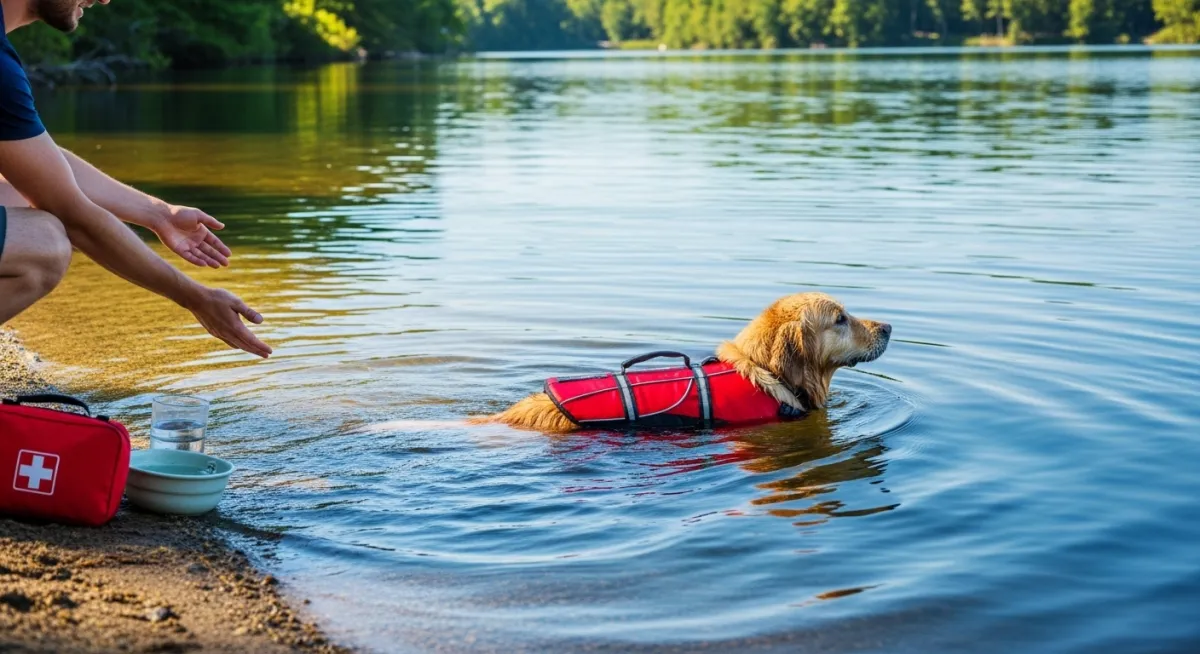
If you ask me, a dog life jacket is a non-negotiable piece of kit. I don’t care if your dog is the strongest swimmer you know. Fatigue, undercurrents, a sudden cramp – these things happen. A good life jacket isn't just for the 'bad' swimmers; it's a smart precaution for every single dog, especially on boats or in deep, open water. When you’re picking one out, make sure it has:
A snug fit: You should be able to get two fingers under it, but it shouldn't be loose enough to twist around.
A strong handle: This is absolutely critical. You need to be able to lift your dog out of the water quickly in an emergency.
Bright colours: The brighter, the better. You want to be able to spot them in an instant.
Scout the Location for Potential Hazards
Before you unclip that lead, take a moment to play detective. Every body of water comes with its own unique set of dangers. Take a quick walk around and assess what you’re dealing with.
Pools: Does your dog know where the steps are? It’s not always instinctive. Spend a bit of time actually teaching them the way out. When you're not around, a secure pool fence is the single most effective way to prevent dog drowning.
Lakes and Rivers: Keep an eye out for strong currents, especially after heavy rain, and be mindful of what could be lurking under the surface. Always check for local warnings about blue-green algae; it’s horribly toxic to dogs. Great organisations like the RSPCA have resources on how to spot it.
The Sea: Rip currents are no joke. They can drag even a powerful swimmer out in a heartbeat. If you have any doubts, keep your dog on a long line and always have a look at the tide times before you go.
Learn Life-Saving Skills like Canine CPR
Okay, this is the big one. And it’s probably the most important point on this whole list. In a genuine worst-case scenario, knowing canine CPR isn't just a useful skill; it could be the one thing that saves your dog's life. You can watch videos online, of course, but nothing can replace proper, hands-on training. At Pet First Aid Training by Sara, we provide accredited courses that are designed to give you the practical skills and, just as importantly, the confidence to act when every second counts.
At the Water's Edge: Supervising for Complete Dog Water Safety
Right, you're there, the sun's out, the water's sparkling. Your job now is to be the lifeguard. And I don't mean just glancing up from your phone every couple of minutes. I mean active, focused supervision, the same way you’d watch a toddler. It’s so easy to get distracted, and a dog in distress rarely makes the kind of noise you'd expect.
Make sure you enforce plenty of breaks. A tired dog is far more likely to get into trouble, and sometimes they're having too much fun to stop on their own. And please, have a bowl of fresh, clean drinking water available. If they have that, they're much less likely to start drinking from the pool, lake, or sea, which can cause anything from a tummy upset to that dangerous water intoxication we talked about.
The Unthinkable Happens: What to Do in a Dog Drowning Emergency
Let's talk about the moment we all hope never, ever comes. Even with all the preparation in the world, accidents can still happen. If you find yourself in a dog drowning emergency, the single most powerful tool you have is your own calm. Your panic will only fuel your dog's, so take a deep breath. A clear head is critical.
1. Get Them Out Safely: Your safety comes first. Don't jump into dangerous water and become a second victim. If you can, call them to the shore, or use the handle on their life jacket to lift them out.
2. Check for Breathing: Lay your dog on their right side. Watch their chest closely. Is it rising and falling? Can you feel any breath coming from their nose?
3. Position to Drain Water: Carefully lift their back end up, so their head is tilted down towards the ground. This uses gravity to help any water drain from their lungs and airway.
Performing Life-Saving Canine CPR
If your dog is not breathing, this is where your training really kicks in. You may need to start canine CPR immediately. This involves a specific rhythm of chest compressions and rescue breaths, and the technique is different for a big dog like a Great Dane than it is for a tiny Chihuahua. This is precisely why a proper, certified course is so vital. Your actions in those first few minutes, before you can get to a vet, are their best and only hope.
And this is crucial: get to a vet. Immediately. Every single dog that has a near-drowning incident needs to be checked by a professional, even if they seem completely fine and are running around again.
After the Swim: Post-Dip Care to Prevent Complications
Think the job's done once you've towelled them off and packed the car? Not quite! The care you provide after the swim is just as important to prevent dog drowning complications and other health niggles.
Rinse Them Thoroughly: Get all that chlorine, salt, algae and general gunk off their coat and skin. A good rinse prevents irritation and hotspots.
Dry Their Ears: Ah, the dreaded ear infection. Water's least favourite souvenir. Trapped moisture is the number one cause of painful ear problems. Gently dry the outer ear with a soft towel or some cotton wool (never push anything inside the ear canal, like a cotton bud).
Watch for a Few Days: Keep a really close eye on your dog for the next 24 to 48 hours. Any coughing, unusual tiredness, or laboured breathing is a red flag. It could be a sign of secondary drowning, and it means you need to get to a vet right away.
By making this checklist a part of your routine, you can really shift your approach to dog water safety from being reactive to being proactive. It lets you turn down the volume on that nagging worry and just be present in the moment, enjoying the fun.
Don't just cross your fingers and hope for the best; be prepared for the worst. Being a responsible dog owner is about being their protector, equipped with the knowledge to handle anything. Learning a skill like canine CPR is one of the most powerful gifts you can give the animal you love. It’s a genuine investment in their safety and your peace of mind. Why wouldn't you want to be your dog's hero?
Visit us at Pet First Aid Training by Sara to book a course and learn the hands-on skills you need to handle a dog drowning emergency with confidence.