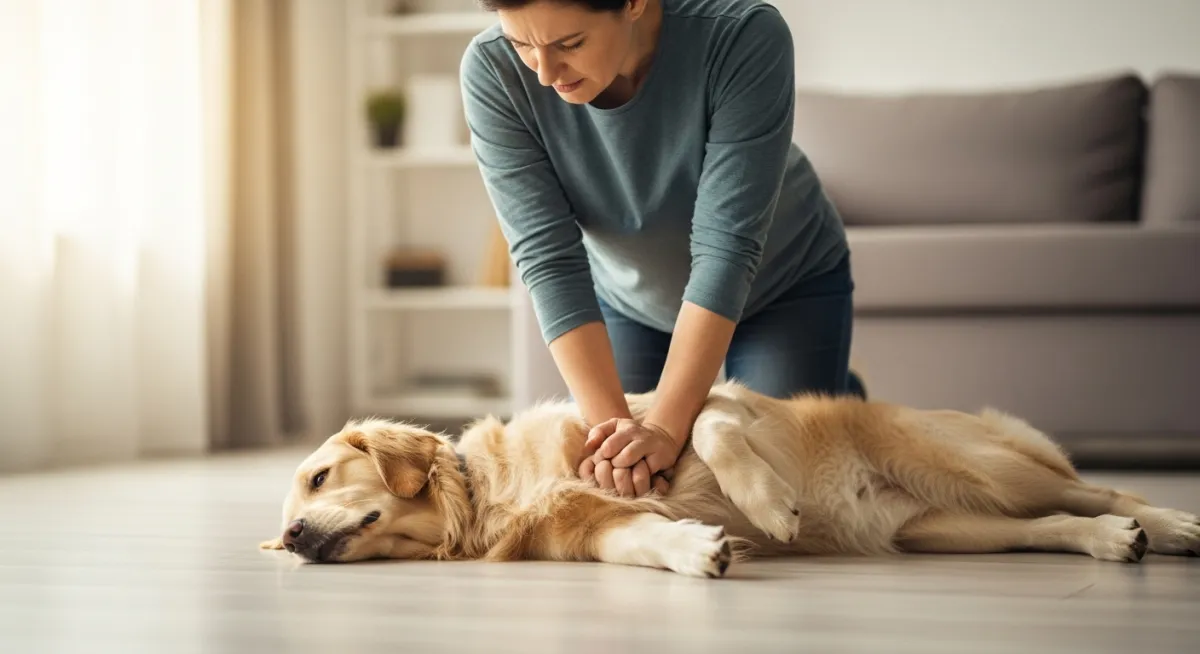
Dog CPR
Your Guide to Dog CPR & Why It’s a Skill to Know
Let’s be honest, it’s a scenario none of us ever wants to imagine. You’re out on a walk, or playing in the garden, and suddenly your dog collapses. They’re not breathing. That cold, sharp feeling of panic starts to rise. In that moment, would you know what to do? Most of us, if we’re being truthful, wouldn’t. It’s a terrifying thought, but being prepared with the basics of dog CPR can transform that feeling of helplessness into one of action. Learning these core canine first aid techniques isn’t just some 'nice to have' skill; it’s about having the knowledge to potentially save a dog's life. And the good news? These aren't complicated medical procedures. They are fundamental emergency skills that any loving owner can, and should, learn.

What is Dog CPR and When is it Absolutely Necessary?
We’ve all seen CPR depicted in films and on TV for people, but what does it look like for our dogs? Cardiopulmonary Resuscitation (CPR) is what you do when a heart has stopped beating. It’s a combination of chest compressions and rescue breaths designed to keep oxygenated blood flowing to the brain, buying precious time until the heart can hopefully be restarted. It’s a cornerstone of canine first aid, but I can't stress this enough: you need to be absolutely certain it's needed.
Let me be crystal clear here. Dog CPR is the absolute last resort. It is only for a dog that is unconscious, has stopped breathing, AND has no pulse. Performing CPR on a dog whose heart is still beating is not only unnecessary but can cause severe injury. So, before you even consider starting, you have to run through a few quick, vital checks.
Before You Begin: The Essential ABCs of Pet Resuscitation
Before you jump into action, you have to check the ABCs. This is one of the most vital emergency skills you can have because it tells you what’s really going on. Think of it as your rapid assessment in a moment of crisis.
A for Airway
First things first, is anything blocking their airway? Lay your dog on their side, then carefully open their mouth and gently pull their tongue forward so you can get a good look inside. Are there any obstructions a bit of ball, a chunk of food? If you can see something, use your fingers in a careful sweeping motion to try and clear it out. The key word here is careful you don't want to accidentally push it further in.
B for Breathing
With the airway clear, it's time to check if they are breathing. Watch their chest closely. Do you see it rising and falling? A good tip is to lower your own cheek close to their nose and mouth; you should be able to feel even a faint breath. If you’ve watched and felt for a good 10 seconds and there’s nothing, then it's safe to assume they are not breathing.
C for Circulation (Pulse)
This is the final checkpoint before starting dog CPR. Finding a pulse can feel tricky, but the best spot is the femoral artery. You can find it high up on the inside of their back leg, right in the crease where the leg joins the body. Use two fingers and press gently but firmly until you feel for that familiar beat. If there's no pulse and no breathing, it's time to begin pet resuscitation.
A Step-by-Step Guide to Performing Dog CPR
Right, you've done the checks. No breathing, no pulse. The situation is critical, but you can do this. Stay as calm as you can and follow these steps. Your focused response is everything right now.
Step 1: Positioning Your Dog Correctly
How your dog is positioned really matters for making the compressions effective. You'll want to gently lay them on their right side on a hard, flat surface. This alignment gives you the best access to their heart. The exception is for barrel-chested breeds like Bulldogs; for them, it's often better to perform compressions with them on their back.
Step 2: Performing Chest Compressions
Your goal here is simple: you're manually becoming the heart, pumping blood to their vital organs.
For medium to large dogs: Find the spot where their bent elbow touches their chest. Place the heel of one of your hands right there, and your other hand on top. Lock your fingers, keep your arms straight, and push down hard and fast.
For small dogs or puppies: A gentler approach is needed. You can often use one hand to encircle the chest, placing your thumb on one side of the ribcage and your fingers on the other, and squeeze rhythmically.
The rhythm is key. You're aiming for 100-120 compressions per minute. It helps to pump along to the beat of a song like 'Stayin' Alive' it sounds a bit odd, but it works. You need to be firm, compressing the chest by about one-third to one-half of its normal depth.
Step 3: Giving Rescue Breaths for Effective Pet Resuscitation
After 30 compressions, you need to deliver two rescue breaths. Hold your dog's muzzle closed with your hands and extend their neck slightly to create a clear airway. Then, place your mouth over their entire nose, creating a tight seal, and breathe out for about a second. Do this twice, and watch to make sure their chest rises with each breath. This part of dog CPR is just as important as the compressions.
Step 4: Continue the 30:2 Cycle
Now, you just repeat the cycle: 30 compressions, then 2 breaths. It's a gruelling process. Every two minutes or so, quickly stop and check if they've started breathing on their own or if you can find a pulse. Otherwise, you keep going until your dog shows signs of life, a vet arrives to take over, or you’re physically unable to continue. Don't give up.
Why Every Dog Owner Needs Proper Canine First Aid Training
Reading an article like this is a fantastic start, but nothing can truly substitute for hands-on training. A proper canine first aid course does more than just walk you through the steps of pet resuscitation; it builds your confidence. It gives you the muscle memory to act without hesitation when every second is critical. You'll also learn to handle other terrifying situations like choking, seizures, serious bleeding, or even poisoning. These are all emergency skills that, frankly, every dog owner should have in their back pocket.
A professional training course, like those we run at Pet First Aid Training by Sara, lets you practice on veterinary manikins. You can get a real feel for the pressure and rhythm needed, ask questions, and drill the techniques until they become second nature. It's about turning knowledge into an instinct you can trust.
Common Mistakes to Avoid When Trying to Save a Dog's Life
When panic sets in, it's easy to make mistakes. Knowing the common pitfalls is just as crucial as knowing the steps. Here are a few things to avoid when you're trying to save a dog's life:
Jumping in Too Soon: I'll say it again: never, ever perform compressions on a dog that has a heartbeat. You can cause serious, life-threatening damage. Always, always do your ABC checks first.
Forgetting the Airway: If the airway is blocked, all the rescue breaths in the world won't do a thing. It has to be your very first check.
Using the Wrong Hand Position: The technique for a Great Dane is very different from a Chihuahua. Getting the placement and pressure wrong can make your efforts ineffective or even harmful.
Being Too Tentative: This is a common one. People are afraid of hurting their dog, so they don't push hard or fast enough. Remember, you are fighting for their life. Your compressions need to be firm and rhythmic to work.
Ultimately, being prepared for the worst-case scenario is one of the most loving things you can do for your pet. We all hope we'll never be in a situation that requires dog CPR, but just knowing what to do brings a certain peace of mind. Mastering these emergency skills is about giving your best friend the very best chance. Taking a certified canine first aid course is, without a doubt, the most reliable way to ensure you're ready to save a dog's life if you ever have to.
Ready to feel more prepared? Don’t wait until you're faced with an emergency. Why not sign up for one of our hands-on training courses and build the confidence you need to protect your companion? Come visit us at Pet First Aid Training by Sara to find a course happening near you.